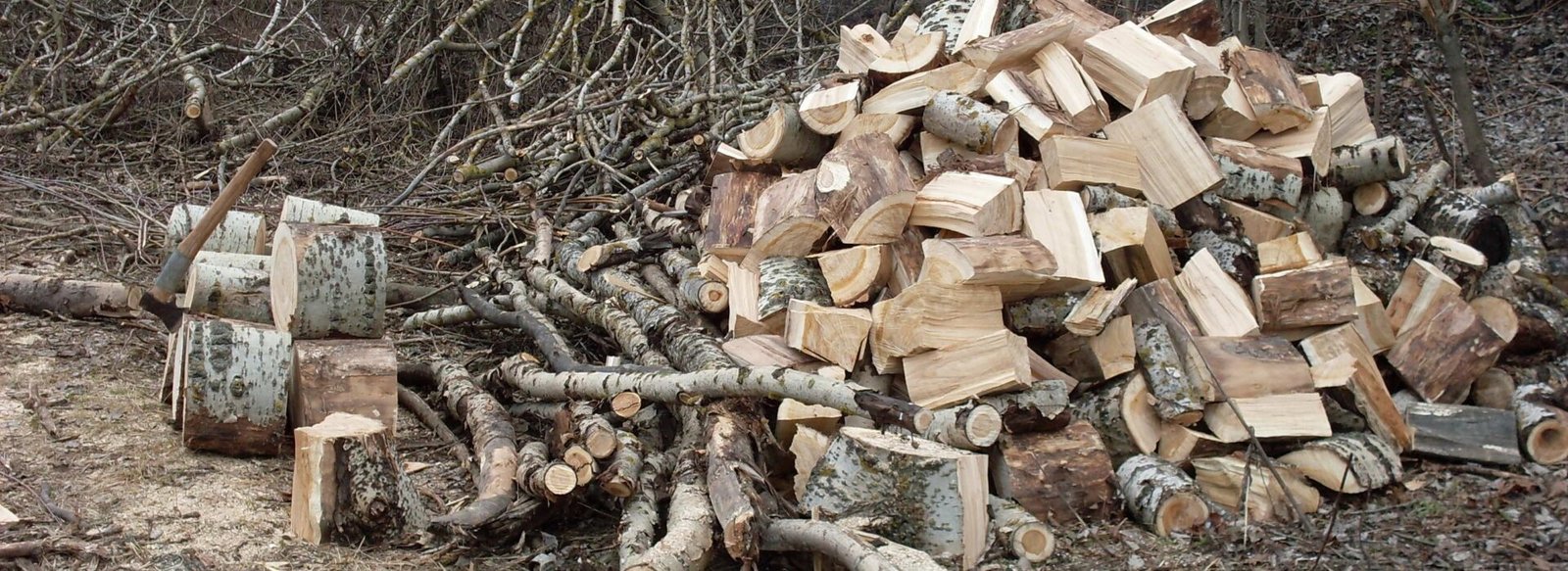

Hügelkultur is a way of building a garden bed on top of buried wood. Logs and branches go down first, finer organic matter goes over them, soil caps the whole thing, and what you end up with is a mound that holds water like a sponge and feeds itself for years as the wood underneath slowly decays.
The name is German — roughly “mound culture” or “hill culture” — and the practice has long-standing roots in Central and Eastern European gardening, where burying woody waste was simply what you did with it. It reached a wider audience through the permaculture movement, most visibly through the Austrian farmer Sepp Holzer, who built enormous hügel mounds across a steep alpine site where conventional cultivation had failed.
For gardeners today the appeal is straightforward: it turns storm debris and pruning waste into a bed that needs less watering, less fertiliser and less digging than the alternatives.
What a hügelkultur bed looks like inside
The structure is layered, coarse at the bottom and fine at the top. Each layer breaks down at a different rate, which is what gives the bed its staged, multi-year fertility.
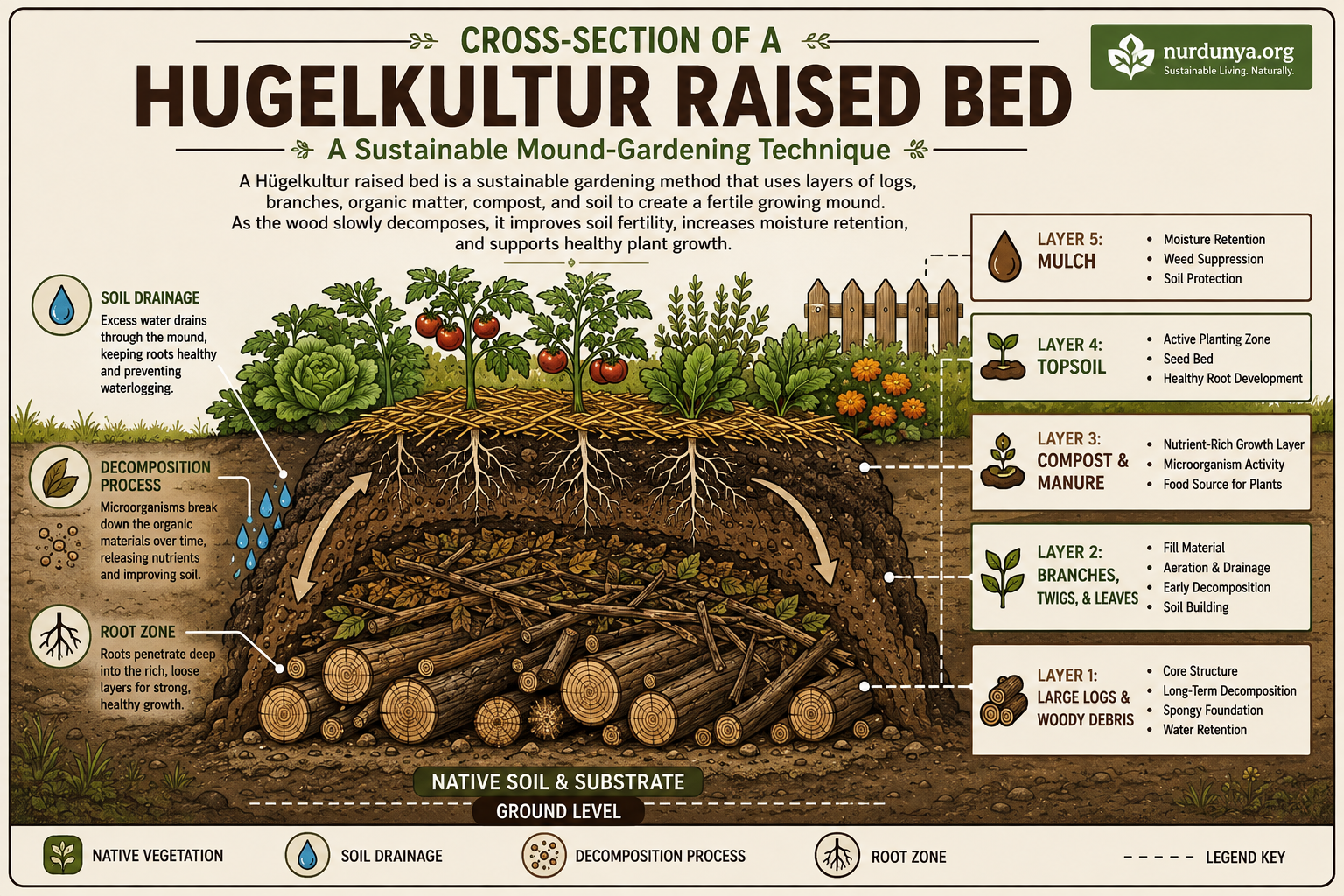
How hügelkultur works
The wood acts as a water reservoir
This is the effect most people build a hügel bed for. Decaying wood is extraordinarily absorbent — partly rotted logs can hold a large multiple of their dry weight in water. Rain and irrigation soak into that buried mass and are released back into the root zone slowly over the following weeks.
In practice, an established mound in a temperate climate often needs little or no supplementary watering after its first year or two, once the core has begun to break down and the root systems have reached it. In hot or arid regions the effect is real but less dramatic, and the mound shape works against you by increasing exposed surface area — which is why dry-climate gardeners often build the whole thing into a sunken pit instead.
Decay releases nutrients on a slow schedule
Fungi and bacteria colonise the buried wood and take years to work through it. The result is a gradual, self-renewing nutrient supply rather than the spike-and-crash pattern of applied fertiliser. Different layers run on different clocks: the green matter and compost feed the first season or two, the twigs carry the middle years, and the log core keeps releasing well beyond that.
Structure, aeration and warmth
As the wood collapses it leaves behind an open, sponge-like structure full of air pockets and fungal networks. Roots travel through it easily, and the bed resists the compaction that flat ground suffers under rain and foot traffic. Active decomposition also gives off a modest amount of heat, which can nudge the growing season open a little earlier in spring — most noticeably in the first year, when decomposition is fastest.
More planting surface, and microclimates
A mound has more skin than a flat bed of the same footprint, so you can plant more into the same square metres. The faces also behave differently: the sun-facing slope is warmer and drier, the shaded side cooler and damper, and the crest drains fastest of all. That gives you three or four distinct niches to match plants to — heat-lovers on the sunny face, leafy greens on the shaded one, drought-tolerant herbs along the top.
Which wood to use — and which to avoid
Wood choice matters more than any other material decision, because the core is what you cannot change once the bed is built.
Good choices
Deciduous hardwoods that are already somewhat rotted are ideal — apple, maple, birch, alder, poplar, ash, oak. Punky, spongy wood that crumbles under a boot has already started the process and will hold water immediately rather than in three years’ time.
Use with caution
- Conifers (pine, spruce, fir) decay slowly, are resinous, and acidify the surrounding soil. Usable if that’s what you have, but better buried deep in the core with plenty of other material above.
- Rot-resistant species such as cedar, black locust and redwood are working against the entire premise — they will sit inert for a very long time.
- Willow, poplar and cottonwood root readily from cut wood. Fresh material can sprout inside your bed. Let it dry out thoroughly first, or use only well-rotted pieces.
Avoid
- Black walnut and its relatives release juglone, which is toxic to tomatoes, potatoes, peppers and many other vegetables.
- Treated, painted or preserved timber of any kind — railway sleepers, pressure-treated decking, painted offcuts. These leach exactly what you do not want in a food bed.
- Diseased wood, particularly anything carrying a persistent soil-borne pathogen.
How to build a hügelkultur bed
1. Choose orientation and site
On flat ground in temperate latitudes, running the mound roughly north–south gives both long faces reasonably even light. On a slope, running it along the contour lets the mound double as a water-slowing feature and reduces erosion. Give yourself comfortable access down both sides — anything much over 1.2 metres wide gets awkward to reach into.
2. Dig a shallow trench (optional)
Scraping out 20–30 cm and setting the turf aside gives you a lower finished height, better contact between wood and soil biology, and free topsoil to put back on top. You can skip it entirely and build directly on the ground — laying cardboard down first to smother grass — if digging is impractical.
3. Lay the log core
Largest material at the bottom, packed as tightly as you can manage. Big voids are the main cause of dramatic settling later, so fill the gaps between logs with smaller offcuts and soil as you go. Soak the wood thoroughly at this stage; dry logs will otherwise pull moisture out of the bed for its first season.
4. Build up through the finer layers
Branches and twigs next, then leaves, grass clippings, spent plants and kitchen scraps, then aged manure or compost. Water each layer as you build and tread it down. This is also where you correct for nitrogen: manure, comfrey, grass clippings or any other nitrogen-rich material buffers the drawdown that fresh wood causes.
5. Cap with soil and mulch
Finish with 10–15 cm of topsoil — the turf you set aside, laid grass-side down, works well underneath it. Mulch the whole surface heavily with straw or leaf litter to stop the sides washing off before roots knit the mound together. Steep sides are more prone to this, so keep the slope under about 45 degrees unless you are planting into it immediately.
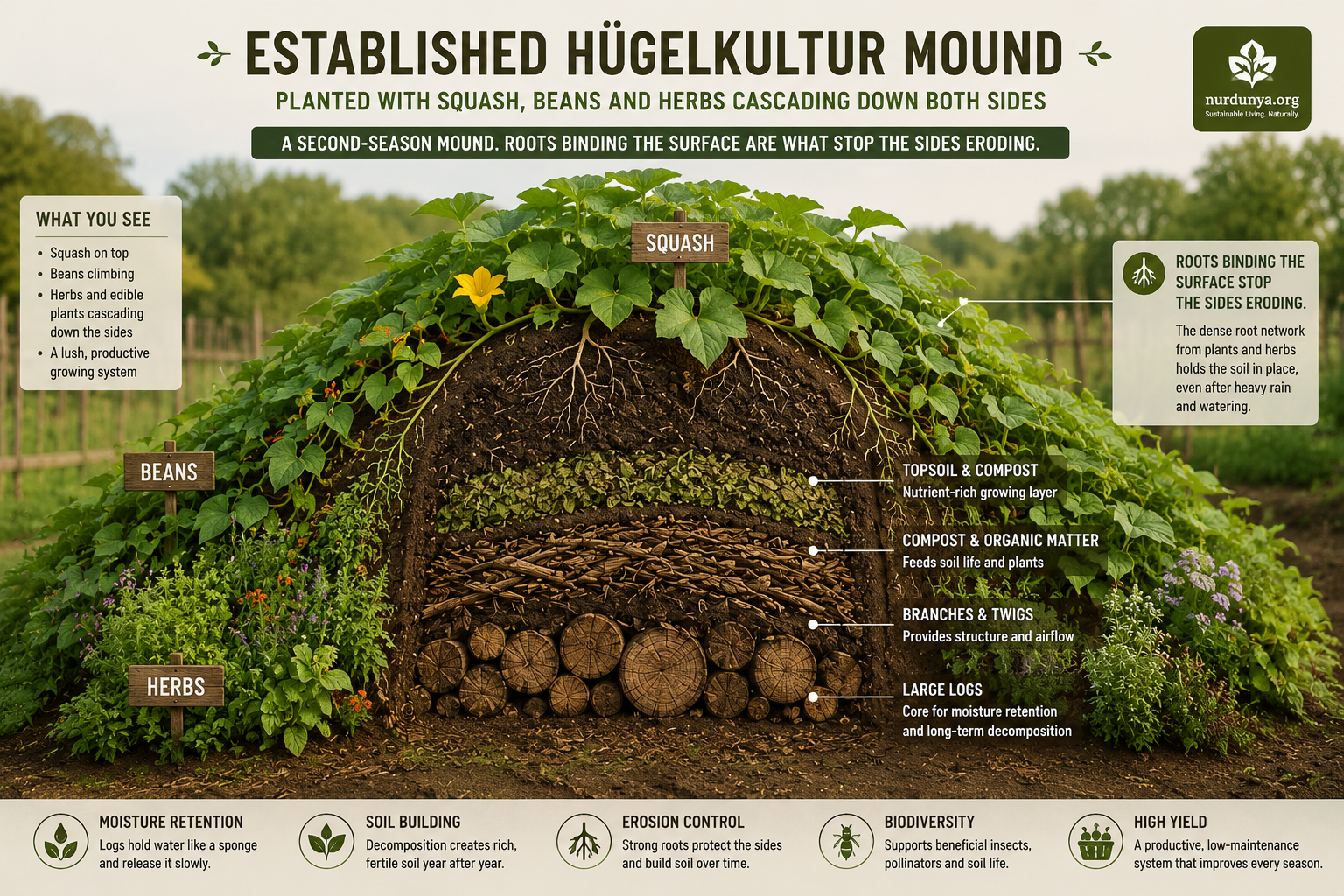
What to plant, and when
The first season is the awkward one. Nitrogen is being pulled into the wood, the mound is still settling, and heavy feeders will show it. Sensible first-year choices are legumes — beans, peas, clover as a living mulch — alongside potatoes, squash and pumpkins, which cope well and whose sprawling habit covers and protects the slopes.
From the second year the bed generally comes into its own, and brassicas, tomatoes, leafy greens and most other vegetables do well. By years three to five you are into the most productive phase, as the core wood breaks down in earnest. Perennials — herbs, soft fruit, asparagus, rhubarb — suit the long timeframe particularly well, though it’s worth waiting until the worst of the settling has finished before committing them.
Drawbacks worth knowing about
- Nitrogen drawdown. Fresh wood pulls nitrogen from surrounding soil as fungi colonise it. Managed by using partly rotted wood, adding manure or green material during construction, and planting legumes early.
- Settling. Expect a substantial drop in height over the first two or three years — often a quarter to a third. Build higher than your target, and plan to top the bed up.
- Rodents. The voids in a fresh log core make excellent vole and mouse habitat. Packing the core tightly and filling gaps with soil helps considerably; hardware cloth under the trench is an option where pressure is severe.
- Labour up front. A hügel bed is a genuinely heavy day’s work compared with a conventional raised bed, and the payoff is spread over the following decade.
- Dry climates. The exposed mound shape can lose more moisture than it stores. Sunken or partially sunken variants are usually the better call.
Variations
Sunken hügelkultur buries the whole structure at or below grade — the standard adaptation for arid regions, where the goal is capturing water rather than shedding it.
Hügel-filled raised beds put the log-and-branch core into the bottom of a conventional timber or metal frame. This is the most common approach in small urban gardens: it keeps the tidy rectangular footprint, cuts the volume of bought soil needed by a large fraction, and delivers most of the water-holding benefit.
Contour hügel swales run mounds along the contour of a slope, sometimes paired with a ditch on the uphill side, so the bed functions as water harvesting and erosion control as well as growing space.
Hügel-on-hardstanding builds the mound over compacted ground, rubble or old concrete where digging is out of the question, using cardboard and depth to establish a growing medium from scratch.
Frequently asked questions
How long does a hügelkultur bed last?
Typically five to ten years for a small mound and up to twenty or more for a large one built with substantial logs. It doesn’t fail at the end — it gradually becomes ordinary, very rich soil, at which point you can rebuild on the same spot.
Can you build a hügelkultur bed with fresh green wood?
Yes, but expect a stronger nitrogen drawdown in the first year and slower water-holding performance until decay is under way. Compensate with extra manure or green material, and plant legumes and other light feeders that season.
How tall should the mound be?
Most home gardeners build somewhere between 60 cm and 1.5 metres. Taller mounds hold more water and last longer, but they settle more, erode more readily and are harder to reach across. Anything under about 45 cm gives you comparatively little of the water-storage benefit.
Do you need to dig a trench?
No. Trenching gives a lower finished profile and better soil contact, but building directly on the ground over cardboard works fine and is far less effort.
Is hügelkultur the same as no-dig gardening?
They overlap but aren’t identical. Both avoid ongoing cultivation and build fertility from the surface down. Hügelkultur is specifically about the buried wood core and the water reservoir it creates, and the initial build often does involve digging.
Will it attract termites?
In termite regions, buried wood can attract them, so keeping mounds well away from timber-framed structures is the sensible precaution. In most temperate gardens the organisms colonising the core are fungi, beetles and earthworms rather than anything structurally threatening.
Can you build hügelkultur in containers or small gardens?
Yes — the raised-bed variant is well suited to small spaces. Fill the lower third to half of a deep frame or large container with branches and woody prunings, then top with soil and compost. You get much of the moisture buffering while using considerably less purchased growing medium.