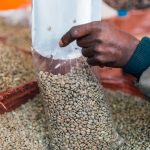
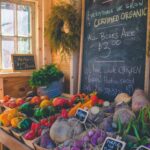
Every growing season starts with the same small decision: which seed goes into the soil. It looks like a technical choice — germination rate, yield, disease resistance — but underneath it is a much bigger question about ownership, memory, and dependency. Two very different seed systems compete for that decision today: indigenous (desi) seeds, passed down through generations of farmers, and hybrid seeds, engineered in laboratories and sold fresh each season. Understanding how each one actually works on the ground explains a great deal about the state of agriculture today.
Indigenous (Desi) Seeds: Farming as an Inheritance
Desi or heirloom seeds are the varieties farming communities have grown, saved, and reselected for generations, long before formal plant breeding existed as a science.
They reproduce themselves. The defining trait of an indigenous seed is that it breeds true. A farmer can harvest grain from this year’s crop, set some aside, and plant it next season with confidence that the resulting plants will carry the same characteristics as their parents — the same taste, height, maturity time, and hardiness. This is possible because these varieties are what breeders call “open-pollinated”: stable, genetically consistent populations built up over many generations of natural selection and farmer selection working together.
They lean on natural biodiversity, not uniformity. Because desi seeds pollinate naturally — through wind, insects, or self-pollination in the open field — a single variety carries a certain amount of internal genetic diversity. That diversity is not a flaw; it’s insurance. A field of desi wheat or rice is not one clone repeated a million times, but a population with a spread of traits, which is part of why these varieties tend to cope better with an unpredictable season — a dry patch, an unexpected pest, a late frost.
They were “bred” long before breeding was a science. Farmers have improved these varieties for centuries through simple, intuitive selection: saving seed from the plant that survived the drought, tasted the best, or held up best in storage, and discarding the rest. Agricultural researchers call this same practice “mass selection” or, when done systematically with communities, “participatory plant breeding” — and it is, in effect, the original breeding program, running one harvest at a time for thousands of years.[1]
This is also why organizations built around seed conservation — India’s Navdanya being the most prominent example — describe seed-saving not just as an agronomic habit but as a form of sovereignty. Navdanya has built more than 150 community seed banks across 22 Indian states specifically to keep native, climate-adapted varieties in circulation, saved and shared for free rather than purchased anew each year.[2] The organization’s founder, Vandana Shiva, frames the ability to save and re-sow seed as inseparable from a farmer’s financial independence — a farmer who can save seed is, by definition, a farmer who isn’t required to go back into the market to grow food.[3]
Hybrid Seeds: Engineered for One Season Only
Hybrid seeds work on an entirely different logic, and the difference isn’t incidental — it’s the whole point of how they’re made.
They are built by crossing two “pure” but different parent lines. A seed company first spends years developing two separate inbred parent varieties — deliberately narrowed, self-pollinated lines that are each highly uniform but often unremarkable on their own. One might be crossed for height, another for a dwarfing trait; one for disease tolerance, another for grain quality. When those two specific inbred parents are cross-pollinated under controlled conditions, the resulting “F1” (first-generation) offspring often shows a burst of vigor — faster growth, higher yield, sturdier stems, more uniform maturity — a phenomenon breeders call heterosis, or hybrid vigor.[4]

Photo by on Pexels
That vigor is a one-generation phenomenon. This is the detail that defines the entire hybrid seed business model. The improved performance of an F1 hybrid comes specifically from the fresh combination of two distinct, stable parent lines. If a farmer harvests an F1 hybrid crop and saves its seed, the next generation (F2) is the product of the F1 plants pollinating each other — not the original two pure parents. Because those F1 plants are genetically mixed rather than stable, their offspring segregate into a wide, unpredictable range of traits. Uniformity collapses, and much of the vigor that made the hybrid attractive in the first place is lost.[5] Patent filings on commercial hybrid corn varieties describe this plainly: “it is not generally beneficial for farmers to save seed of F1 hybrids. Rather, farmers purchase F1 hybrid seed for planting every year.”[6]
The company, not the field, is where reproducibility lives. This is the flaw at the center of the hybrid model. With desi seeds, reproducibility exists in the farmer’s field, season after season, owned by no one but the farmer. With hybrids, reproducibility exists only in the seed company’s breeding program — as long as the company keeps its two original inbred parent lines pure, it alone can recreate the hybrid indefinitely. The farmer isn’t buying a seed so much as renting one harvest’s worth of access to a formula the company controls and the farmer never can.[7]
Natural farming isn’t really an option once hybrids are in the ground. The vigor bred into a hybrid is calibrated against a package of chemical inputs, not against natural soil fertility. Hybrids are selected and tested to perform under heavy fertilization, and without that steady chemical feed their yield advantage largely disappears — which is why hybrid seed production and cultivation guides call for synthetic fertilizers, pesticides, and fungicides as standard practice, not an optional add-on.[19] Desi seeds, by contrast, evolved without that chemical dependency in the first place, which is exactly why they remain compatible with organic and natural farming while hybrids, in practice, are not.[20]
Why This Changes the Farmer’s Relationship With the Harvest
The seed-saving question is not academic — it restructures who a farmer answers to every year.
With desi seeds, the harvest itself replenishes the next season’s planting stock at essentially no extra cost. The farming cycle is closed: seed produces plant, plant produces seed, seed produces plant again. Because these varieties are also more genetically diverse and locally adapted, seed-conservation groups argue they tend to be more resilient to erratic weather and localized pests than a single uniform hybrid line — Navdanya, for instance, has run a “Seeds of Hope” program since 1998 specifically to get flood-, drought-, and salt-tolerant native varieties back into the hands of farmers recovering from disasters.[8]
With hybrid seeds, that cycle is broken by design — not by accident, but because a self-renewing seed would be a one-time sale. Because saved hybrid seed won’t reliably reproduce the traits that made it valuable, the farmer must return to the seed company at the start of every season to buy fresh seed — turning what was once a one-time purchase (or no purchase at all, if seed was saved or exchanged) into a recurring, permanent line item in the farm’s budget. Critics of this system describe it as a “dependency cycle”: the farmer permanently loses the traditional capacity to multiply their own seed and is locked into an ongoing commercial relationship with seed manufacturers that has no natural end point and benefits the manufacturer far more than the farmer.[9]
The Cost of the Hybrid Model
Researchers who have studied this shift point to the real damage the hybrid seed model does to farmers. The Green Revolution’s high-yield hybrid varieties typically required far more fertilizer, pesticide, and irrigation than the traditional varieties they replaced — inputs that poorer farmers often couldn’t afford, which in some regions widened inequality even as national-level yields rose.[10] And on the seed-saving question specifically, even sources generally favorable toward modern seed technology are forced to acknowledge the basic mechanics: unlike traditional varieties, hybrid seed cannot be effectively saved and replanted, which locks farmers into a recurring cost that traditional seed systems never impose.[11]
The Bigger Picture: A Shrinking Gene Pool
There’s a second cost to the shift toward hybrids that goes beyond any individual farmer’s budget: the erosion of crop diversity itself.
For decades, the FAO and allied conservation bodies have circulated the estimate that roughly 75% of agricultural crop genetic diversity was lost over the twentieth century, largely through the replacement of local, farmer-saved landraces with modern, uniform commercial varieties.[12] It’s worth noting, in the interest of accuracy, that a 2022 review in the journal New Phytologist traced this famous statistic back to a 1993 FAO document and found its original data source was never clearly documented — meaning the number is a widely repeated estimate rather than a precisely measured figure.[13] Even so, the underlying direction isn’t seriously disputed: independent country-level surveys keep finding the same pattern, from over 90% of historical crop varieties disappearing from some farmers’ fields to specific documented cases like Ethiopian barley landraces, where more than half of the varieties once recorded in a district are now gone entirely.[14] Today, just 30 crops supply 95% of human dietary energy, and four of them — rice, wheat, maize, and potatoes — account for well over half of it.[15]
This matters beyond nostalgia for old crop varieties. That shrinking gene pool is also the raw material plant breeders depend on to fight the next wave of pests, diseases, and climate shifts — including breeding the next generation of hybrids. A narrower base of genetic diversity leaves the entire food system with fewer tools to adapt when conditions change.[16]
The Underlying Trade-Off
Strip away the branding, and the hybrid seed model is built on a flaw, not a feature. Desi seeds represent a self-sustaining system: a farmer plants, harvests, saves, and plants again, generation after generation, at no recurring cost and with no outside permission required. Hybrid seeds break that cycle by design. Their appeal is real but short-term — a single season’s performance engineered to fade by the very next generation — which means the farmer can never actually own the system that feeds them. Every harvest just resets the clock on the next purchase.
That isn’t an accident of biology; it’s the business model. A seed that bred true would only need to be sold once. A seed that doesn’t creates a buyer for life. The dependency this generates flows in one direction — away from the farmer and toward the seed company that controls the parent lines — which is why critics describe it less as an agricultural choice and more as a permanent transfer of control from the field to the corporation.
Footnotes
- Traditional farmer selection of seed for desirable traits is documented as a long-standing precursor to formal plant breeding, sometimes formalized today as “participatory plant breeding” or mass selection carried out by farming communities over successive generations. ↩
- Navdanya, “Biodiversity, Organic Farming & Seed Sovereignty,” navdanya.org — describes more than 150 community seed banks across 22 Indian states conserving native varieties that are saved, shared, and bred freely. ↩
- Navdanya International, “Seeds of Diversity, Resilience and Freedom,” navdanyainternational.org — Vandana Shiva connects farmers’ seed sovereignty directly to freedom from debt and to increased farm income. ↩
- Park Seed, “Understanding Hybrid Plants and Seeds: F1, F2, and Beyond,” parkseed.com — explains the controlled cross-pollination process used to produce F1 hybrids and the resulting hybrid vigor. ↩
- Arkansas Cooperative Extension Service, “F1 Hybrid Seeds,” uaex.uada.edu — notes that F1 hybrid seed does not breed true and that saved seed produces unpredictable second-generation (F2) traits. ↩
- U.S. Patent filing, “Inbred corn plant 85DGD1 and seeds thereof,” USPTO, image-ppubs.uspto.gov — states directly that hybrid vigor is largely lost in the F2 generation and that farmers therefore purchase new hybrid seed annually rather than saving it. ↩
- Same USPTO filing as above — describes how hybrid seed can be reproduced indefinitely by the breeder, but only because the breeder maintains the homogeneity of the two original inbred parent lines. ↩
- Navdanya International, “Seed Freedom,” navdanyainternational.org — describes the “Seeds of Hope” program, running since 1998, distributing flood-, drought-, and salt-tolerant native seed varieties to farmers affected by disasters. ↩
- Wikifarmer, “What is Green Revolution: History, Technologies, and Challenges,” wikifarmer.com — notes that, unlike traditional varieties, hybrid seeds generally cannot be saved and replanted, requiring farmers to purchase new seed each season and increasing the ongoing cost of farming. ↩
- EBSCO Research Starters, “Green Revolution,” ebsco.com — describes how the input-intensive nature of Green Revolution hybrid varieties (fertilizer, irrigation, pesticides) at times deepened inequality by disadvantaging farmers who couldn’t afford those inputs. ↩
- Wikifarmer, same source as note 9 — a resource generally favorable toward modern agricultural technology, yet explicit that hybrid seed cannot typically be effectively saved and replanted. ↩
- FAO, “Harvesting Nature’s Diversity,” fao.org — states that roughly 75% of agricultural crop genetic diversity has been lost since the start of the 20th century. ↩
- Khoury et al., “Crop genetic erosion: understanding and responding to loss of crop diversity,” New Phytologist (2022), nph.onlinelibrary.wiley.com — traces the “75%” figure to an uncited 1993 FAO/RAFI document and notes the underlying data was never clearly established. ↩
- ScienceDirect, “Genetic Erosion — an overview,” sciencedirect.com; and “Assessment on the Current State of On-Farm Diversity and Genetic Erosion in Barley Landraces from Bale Highlands, Southeast Ethiopia,” ncbi.nlm.nih.gov — document region-specific cases of severe landrace loss. ↩
- ScienceDirect, “A new integrative indicator to assess crop genetic diversity,” sciencedirect.com — cites the figure that just 30 crops provide 95% of human dietary energy, with rice, wheat, maize, and potatoes alone providing more than 60%. ↩
- FAO, “What is Happening to Agrobiodiversity?” fao.org — describes genetic erosion as the loss of genes and gene combinations found in farmers’ traditional varieties that are not present in modern commercial varieties, and its implications for future breeding. ↩
- University of Florida IFAS Extension, “Seed Production and Seed Sources of Organic Vegetables,” journals.flvc.org — notes that standard hybrid seed production relies on chemical fertilizers, herbicides, insecticides, and fungicides, and that hybrids are developed and owned by commercial seed companies rather than grown organically by smaller producers. ↩
- Organic Mandya, “Native Seeds vs Hybrid Seeds: Which Is Better for Sustainable Farming?” organicmandya.com — notes that native varieties evolved without chemical dependency and are naturally suited to organic cultivation, while hybrid seeds are bred for higher yield under input-intensive conditions. ↩