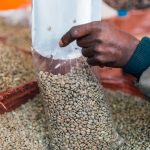
For thousands of years, farmers have saved seed from one harvest to plant the next. It’s how crops adapted to local soil, climate, and pests — and how food sovereignty stayed in the hands of the people who grow the food. Genetic Use Restriction Technology (GURT), better known as the “Terminator Gene,” was engineered to end that practice for good.
What It Is
GURT was developed in the 1990s through a joint effort between the USDA and Delta & Pine Land Company, patented in 1998. The technology inserts a gene that produces a toxic protein into a plant’s seed. That gene stays dormant through the first planting — but it activates in the resulting seed, blocking it from germinating into a fertile next generation. Plant it once, and that’s the end of the line. Farmers are left with no choice but to go back to the seed company, every single season.
Monsanto acquired Delta & Pine Land — and the Terminator patents along with it — in 2007.
A Pledge With an Escape Hatch
In 1999, facing global backlash, Monsanto publicly promised not to commercialize the technology. But the company never fully closed the door: it stated outright that it does not “rule out” developing the technology in the future. That’s not a commitment — it’s a pause button.
This fits a pattern. Monsanto has a documented history of aggressively enforcing seed patents against farmers, including cases where contamination from neighboring GM crops was entirely unintentional — the Percy Schmeiser case being the most cited example. A company willing to sue over accidental cross-pollination is not a company we should trust to self-regulate a technology explicitly designed to make seed-saving impossible.
Meanwhile, seed markets have consolidated dramatically, with a small handful of multinational firms now controlling the majority of the world’s commercial seed supply. Terminator technology is the logical endpoint of that consolidation: a built-in mechanism to guarantee recurring revenue, engineered directly into the biology of the plant.
Why Farmers Should Be Worried
For smallholder and Indigenous farmers — particularly across the Global South — seed-saving isn’t a preference, it’s survival. GURT would:
- End generations-old seed-saving traditions in a single growing season
- Force permanent dependency on whichever corporation holds the patent
- Deepen the economic gap between subsistence farmers and industrial agribusiness
- Erode the genetic diversity that comes from farmers selecting and adapting their own seed over time
The Nightmare Scenario: What If It Escapes?
To date, no Terminator crop has been commercialized or planted in a field — the original patent quietly expired in 2015. But the risk isn’t hypothetical forever; it’s dormant. If this technology were ever revived and released, the consequences of an accidental escape would be severe and, in some cases, irreversible.
How it could spread: Pollen from a GURT crop could cross-pollinate with neighboring non-GM crops, heirloom varieties, or wild relatives — especially in high-outcrossing crops like maize or canola, which pollinate far more readily than self-pollinating crops like wheat or soy.
What happens if it does: A farmer who unknowingly replants contaminated seed wouldn’t just lose that season’s harvest — they’d lose their entire seed stock in one stroke, with no way to recover the line. A landrace or wild relative population carrying the sterility gene could be permanently compromised. This is genetic pollution with no recall mechanism.
Who pays: Based on precedent, it’s unlikely to be the seed company. Historically, contamination liability has fallen on farmers, not the patent holders whose technology caused it.
What Real Preparedness Looks Like: Never Allow It, Anywhere
Buffer zones, surveillance, and liability law all assume the technology gets planted somewhere and we manage the fallout. That’s not preparedness — that’s damage control after the fact. With a technology this irreversible, the only real safeguard is refusing to let it into any field, in any country, at any point:
- A permanent, binding ban — not a pause, not a moratorium up for renewal, but an outright prohibition on developing, field-testing, or commercializing seed sterility technology, written into national law and international treaty alike
- No exceptions for “non-food” crops: the 2006 controversy showed how a pledge limited to “food crops” left the door open for cotton, tobacco, and trees — any carve-out is a loophole waiting to be used
- Zero tolerance at the border and in domestic policy: no import, licensing, or research approval for GURT seed stock under any circumstance, closing off the “quiet field trial” pathway entirely
- Turning the CBD’s 2000 recommendation into binding international law, so it can’t be treated as optional guidance by any government or company
- Seed bank backup of heirloom and landrace varieties regardless — not because a ban might fail, but because seed sovereignty is worth protecting on its own terms
The Bottom Line
Terminator technology has never been sold — but the patents exist, the pledge is hedged, and the corporate incentive to revive it hasn’t gone away. Once a sterility gene escapes into a farmer’s field or a wild population, there’s no recall button. The only acceptable position is that this technology never gets planted anywhere, ever.