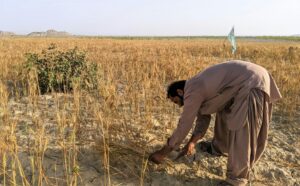
There is a conversation that comes up in almost every family that once farmed. An offer arrives for the old plot, or a relative asks why it is still sitting there earning nothing, and the question goes round the group: should we just sell it? The land is far away. No one has the time for it. It brings in next to nothing as it stands. And the money would be genuinely useful right now. Framed that way, selling sounds like the mature, practical thing to do.
This is an argument that it usually is not, and that the truly practical choice, the one that builds both wealth and meaning over time, is the opposite: keep the land, and then plant.
Most ancestral land is treated as dead weight, an awkward asset to be offloaded the moment the price looks right. Yet it is quietly one of the most valuable things a family can hold, and the distance between what it earns today and what it could become is far smaller, and far cheaper to close, than almost anyone assumes.
The Mindset That Keeps Farming Poor
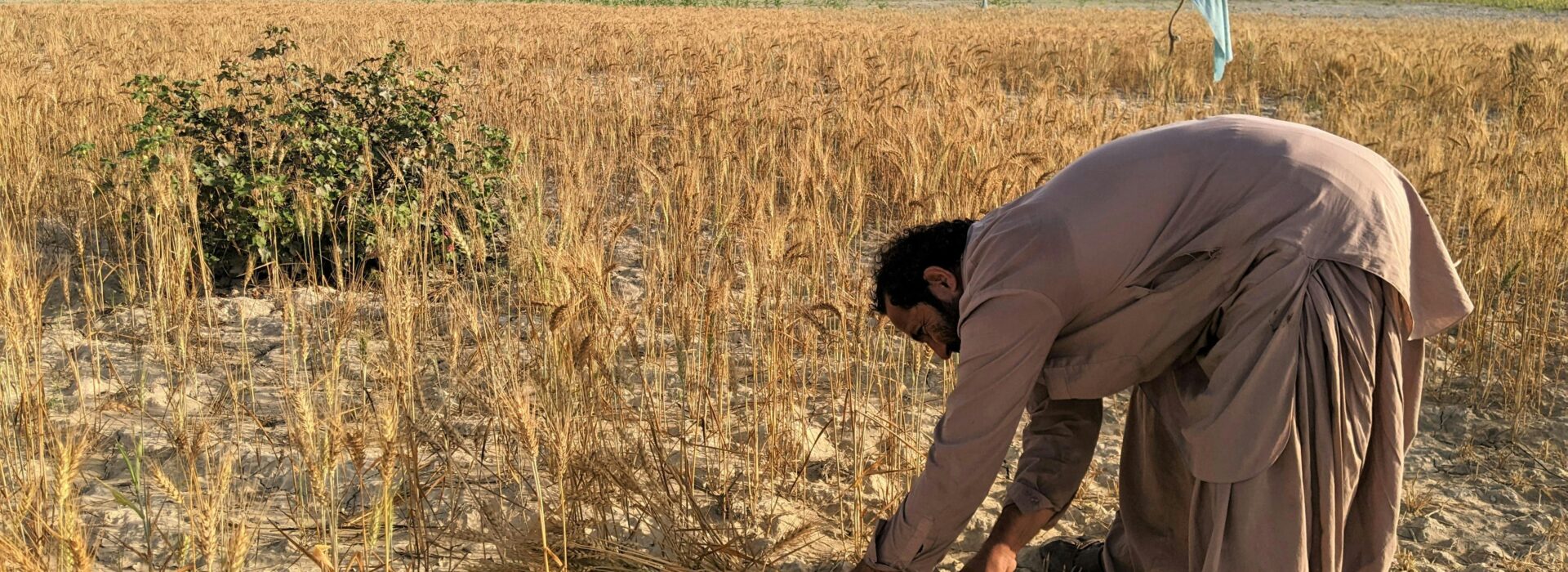
There is a common belief that farming simply does not pay, and that anyone with sense should get out of it. There is truth buried in this, but the diagnosis is usually wrong. Food, in most economies, is kept deliberately cheap, while the cost of running a farm climbs every year. A grower whose selling price barely moves while seeds, fertilizer, fuel, and labour all get more expensive is being squeezed from both ends.
But the deeper problem is a mindset. Most farming is measured by output, the sheer quantity that comes off the land, rather than by productivity, which is output measured against what was put in. A factory owner would never ignore input costs; a farmer trapped in the output mindset does exactly that, pouring in more and more purchased inputs season after season and celebrating the harvest cheque without ever asking what it actually cost to earn. That is the road into debt, and it is why so much conventional agriculture leaves the people doing it exhausted and trapped. The way out is not to abandon the land. It is to change what we measure.
What “Permanent Agriculture” Really Means
The most durable answer to that trap is an approach often called permaculture, a contraction of “permanent agriculture.” The idea is simple and old: take a piece of land and re-establish on it the kind of living ecosystem nature would have built there anyway. Do that, and the system begins to provide for itself. It gives you food, holds your water, cleans your air, and steadies the local climate, without demanding an ever-rising bill of inputs in return.
Crucially, this is less a set of techniques than a way of thinking. You do not need a large holding to begin practising it; the same principles can be applied to a balcony, a backyard, or a single bed of soil. If you want to understand it properly before you touch the ground, it is worth studying how others have done it. There are organizations devoted to permaculture and regenerative design whose work you can learn from for free, each one a practical example of land brought back to health.
Land Is the Only Real Asset
We call it “real estate” for a reason. Land is one of the few assets that does not evaporate, inflate away, or depend on someone else’s promise to pay. And ancestral land carries something no investment account ever will: a place your family belongs to.
So here is the uncomfortable advice. If money is tight, rent your home in the city rather than sinking everything into property there, and hold on to the land your family already owns. Better still, if you can afford it, buy more. The savings you earn in the city are far better invested back into improving that land than spent on things that depreciate the moment you own them. Selling ancestral ground to fund a city lifestyle is one of those decisions that feels reasonable in the moment and becomes a deep regret a decade later, when the value of having a living, productive place to return to has become obvious to everyone.
Catch the Water That Already Falls
The first objection people raise is water. No borewell, no canal, no irrigation, so nothing can grow. This is almost always false. An astonishing volume of rain falls on even a modest plot every year, and on most land the great majority of it simply runs off and is lost.
The work of permaculture is to slow that water down and let it sink in. A few days of simple earthwork, bunds and shallow swales shaped along the land’s natural contours, can hold rainfall where it falls long enough for the soil and the trees to drink it. Trees are central here: their roots open the ground, their canopies cut evaporation, and together they turn a plot from something that sheds water into something that stores it. Many people who do this report that their water anxiety disappears within a single rainy season.
Soil Is the Real Measure of Wealth
If you want one honest number for the health of any piece of farmland, look at its organic carbon, the living, decomposed matter that makes soil dark, spongy, and alive. It is the single best indicator of whether land can keep producing. Years of chemical-intensive farming strip it away, and across vast areas it has fallen to levels at which the land can only manage a handful more seasons before it gives out entirely.
This is why anyone restarting on inherited land should assume the soil needs healing before it needs planting. The plot has most likely been saturated with chemical fertilizer for years, leaving it compacted, biologically dead, and low on organic matter. Rebuild it with methods such as green manuring, sowing fast-growing legumes and turning them back into the soil, alongside heavy compost, well-rotted manure, microbial inoculants, and thick mulch. The principles, and the people who can teach them, are well documented by organizations working on organic farming and soil regeneration. Build the soil back, and everything else becomes possible. Neglect it, and nothing else will work for long.
Start Small, Start Cheap, Start Now
Here is the part that should dissolve most of the fear. You do not need experience, and you do not need acres. The average family holding in many regions is well under a single acre, and even a quarter of an acre is enough to begin.
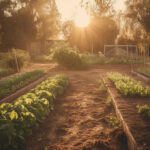
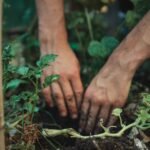
A realistic first step looks like this. Stop the runoff with simple bunds. Plant a handful of hardy native trees for shade, soil, and wildlife, then add a few fruit trees. In the spaces between, sow vegetables, pulses, and a little turmeric or ginger, enough, at first, simply to feed your own household. The cost of starting on this scale is far lower than people imagine; native and government-nursery saplings are cheap or free, and the heavy work of shaping a small plot can often be done by the family itself. The point of the first season is not profit. It is commitment, and learning what the land will teach you. As you go, lean on the experience of others: networks focused on seed saving and agroforestry can save you years of trial and error.
What matters is that you begin, and that you begin now. Every season spent waiting is a season the land keeps degrading and the next generation grows further from where they came from.
Make It a Family Project
This is not a solitary undertaking, and it is not only for men with farming backgrounds. Some of the most successful land revivals are led by women who are already present in the village while others work in the city, and by elders whose knowledge of the local soil and seasons is exactly what the next generation lacks.
And it is, above all, for the children. We have reached a strange point where city parents drive their children out specially just to show them a mango on a tree. A living plot does that work every single day. Children who watch land come back to life, who plant something and return to find it grown, develop a different relationship with the world and with their own roots. When parents and children build a place together, the parents start it and the children, in time, carry it on. That is a legacy worth far more than the cash a quick sale would bring.
The Bigger Picture
None of this stays small. Plant trees and build living soil on one plot and the rain that used to run off now sinks in. Repeat that across a village, a district, a region, and the groundwater begins to rise again, the air cools, and the wider environment slowly heals. This is not wishful thinking. It is simply what happens, plot by plot, when enough people stop taking from the land and start giving back.
That is why it cannot be left to governments or to someone else. Each of us has a role. Wherever you have ground, however little, create a small pocket of forest and food on it. Thousands of these pockets, stitched together across the land, add up to something no single grand project ever could.
The land your family left is not a burden from the past. It is an asset for the future. The only real question is whether someone will show up to unlock it. You could be that someone, and the time to begin is now.